
Auckland Airport: Changes to check-in roll out as Auckland Airport enters major upgrade phase
- 2026-03-23
International travellers departing Auckland Airport from this Thursday will notice changes to the way check-in works, with some flights now using a temporary check-in pavilion known as Zone T.
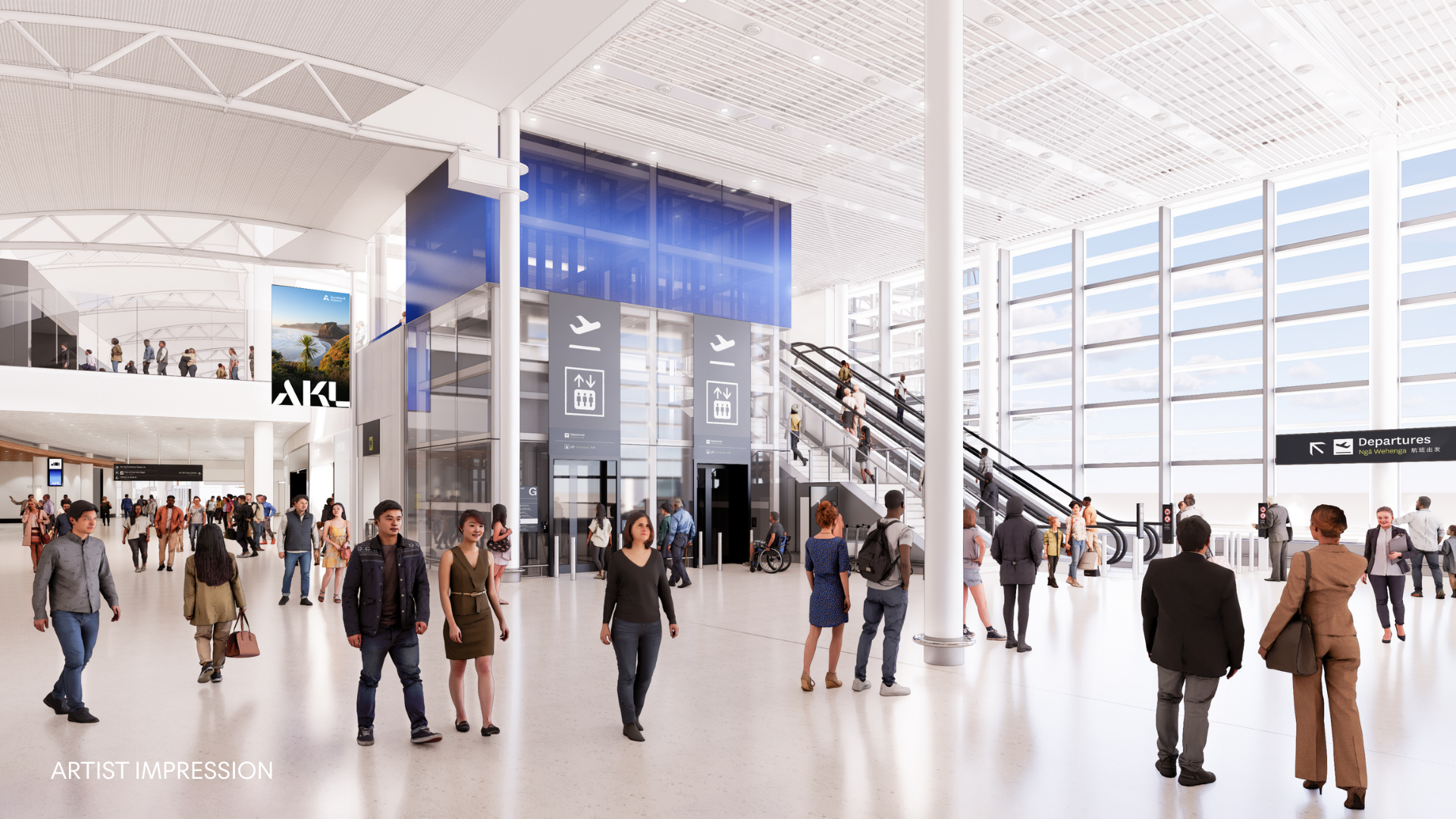
As construction activity ramps up within the terminal, traditional desk-based check-in counters are making way for self-service kiosks and bag drops, temporarily reducing space in the check-in hall and changing how travellers move through the terminal.
As part of these changes, travellers are encouraged to know which check-in zone their departing flight is using, with Zone T providing capacity during peak periods when space is reduced.
Chloe Surridge, Auckland Airport’s Chief Operations Officer, said construction to bring together domestic jet and international services into one integrated terminal will become more visible to travellers from this week onwards.
“Construction of the new domestic jet terminal is well advanced, and people can already see how much of the structure is in place,” Ms Surridge said.
“Construction is now heading indoors to upgrading core spaces like check-in while keeping the airport operating. It’s one of the most complex parts of the project and will mean changes for travellers, including different ways of moving through the terminal alongside new layouts and hoardings.
“Ultimately, this work is about making check-in faster and more intuitive, while also creating room to handle more people at busy times. Moving to self-service kiosks and bag drops gives travellers more control over their journey and reflects what people now expect at major airports around the world.
Ms Surridge said Auckland Airport will have extra dedicated staff on the ground to help travellers navigate through the changes, especially as it opens its new Zone T area.
“People can look for our team in pink high visibility vests, who’ll be there on hand to provide direction to the right check-in zone, particularly during the busy points in the day when Zone T will be operating,” she said.
“While more people will be checking in themselves, airport teams remain an important part of the experience, with staff visible across check-in areas to help travellers who want assistance or simply prefer a bit of guidance.
“Over our busy summer months, around 16,000 people – roughly the population of Whakatāne – check in internationally at AKL every day. We’ll be carefully staging construction, but as we convert the check-in a zone at a time, it temporarily reduces the available space, which is where Zone T comes into play.
It also helps the airport manage growth ahead of the new integrated terminal opening later this decade,” said Ms Surridge.
From the end of March Zone C, which is currently used by up to eight flights a day, will go behind hoardings for around five months to allow construction crews to upgrade check in and replace 22 traditional desks with self-service kiosks and automatic bag drops.
%20(2)%20(3).jpg)
Travellers will either be using the remaining 38 check-in desks, zone E, which is already converted to self-service kiosks and automatic bag drops, or Zone T within the temporary pavilion alongside the Transport Hub.
Know your zone
“With all the changes happening, it will be important for travellers to know which zone they are heading to for check-in. We’re making sure that information is available on our website up to 24 hours ahead of departure. We’ll also be installing additional flight information boards – some up to six metres wide and weighing more than half a tonne – for people to check ahead of reaching the terminal.”
Operational teams will have additional people positioned around the terminal and in Zone T to help travellers find their check-in area and guide them through the process.
“We know these changes come at a time when there is already a lot happening across the airport, so our focus has been on making the transition as clear and straightforward as possible for travellers.
“That includes extra signage, more flight information screens and teams positioned in key areas to help guide people through the process,” said Ms Surridge.
“We’re currently going into a quieter period, with many international airlines focused on the Northern Hemisphere summer.
“That means only a small number of flights will check in at Zone T initially, but it will be used more as travel ramps up next summer.”
For travellers checking in at Zone T, the process will involve two steps:
- Travellers will check in with their airline at the pavilion, where checked luggage will be weighed
- Travellers will then take their bags into the terminal to a dedicated bag drop area – Zone B – to be inducted into the baggage handling system. Airport teams will be on hand along the route and at the bag drop area to check documentation and guide travellers through the process.
Canopies and covered walkways will be going into place, apart from a road crossing, for the 1 min walk to the terminal.
“Zone T is a temporary solution while construction is underway,” Ms Surridge said.
Zone T is expected to operate for around two and a half years.
Managing farewells during construction
To reduce congestion and keep travellers moving during construction, friends and family are asked, where possible, not to enter check-in zones, including Zone T, unless they are travelling.
“We know New Zealanders love coming to the airport to farewell friends and family, and we don’t want to change that,” said Ms Surridge.
“We’re simply asking that check-in areas are used primarily by travellers.”
Visitors can instead head upstairs to the Farewell Area outside the international departure portal, where there is more space to say goodbye. Travellers who need extra support through check-in can still be accompanied.
.jpg)
RELATED NEWS
- 2026-10-23
- Members’ News
Knights, Jets and local legends show travellers how to Fly the Newy Way with Newcastle Airport
- 2026-10-16
- Members’ News
Changi Airports International unveils Airport Pavement Centre of Excellence to drive airport pavement innovation