
BLR Airport launches its own in-house integrated solid waste management centre
- 2026-01-07
Facility enables scientific, end-to-end waste processing on campus, diverting up to 97–98% of waste from landfills and strengthening circular economy practices at BLR Airport
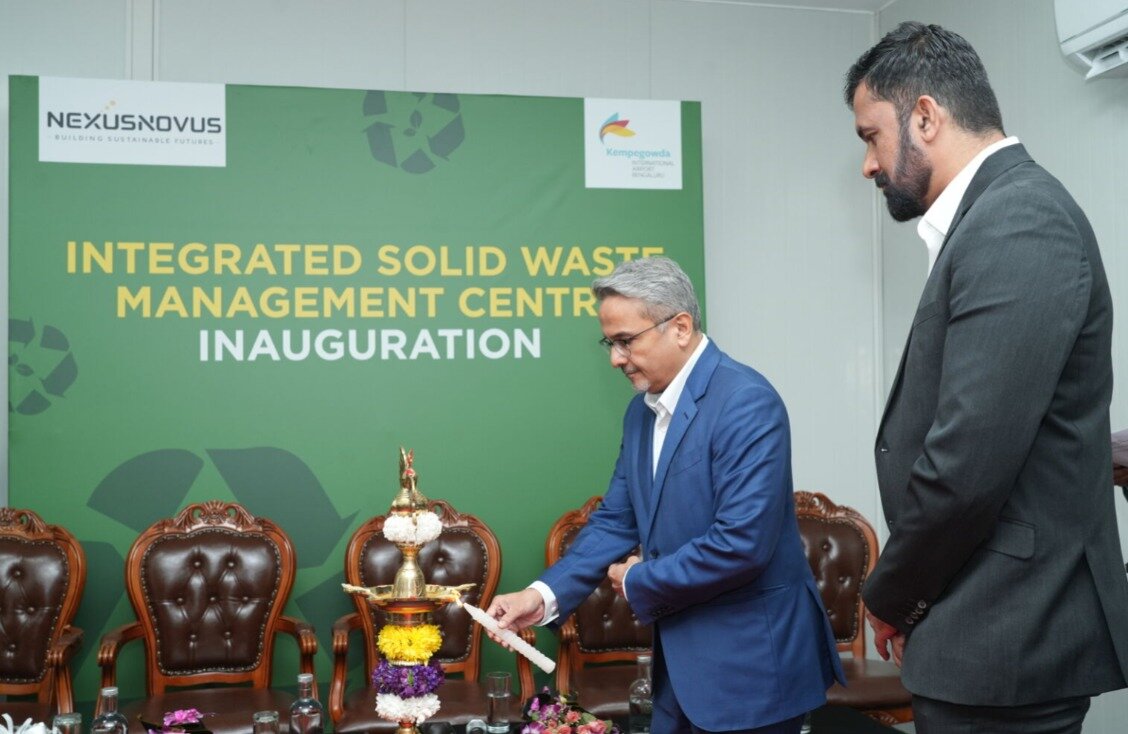
As part of its continued focus on sustainability and responsible resource management, Kempegowda International Airport Bengaluru (BLR Airport) inaugurated its in-house Integrated Solid Waste Management Centre (ISWMC). The facility strengthens scientific waste processing and circular economy practices across the airport ecosystem, reinforcing BLR Airport’s commitment to responsible growth and alignment with India’s sustainability and climate ambitions.
As one of India’s busiest airports, BLR Airport generates approximately 24–26 tonnes per day of solid waste across terminals, airside operations, commercial outlets, and allied facilities currently. The ISWMC enables scientific, end-to-end waste processing at source, enhancing operational control, reducing reliance on external handlers, minimising transportation-related environmental risks, and contributing to lower emissions, improved compliance, and greater operational resilience. With the facility in place, the airport expects to reduce landfill disposal to 2–3% of total waste, enabling 97–98% of waste to be recycled or recovered through in-house processes and authorised partners.
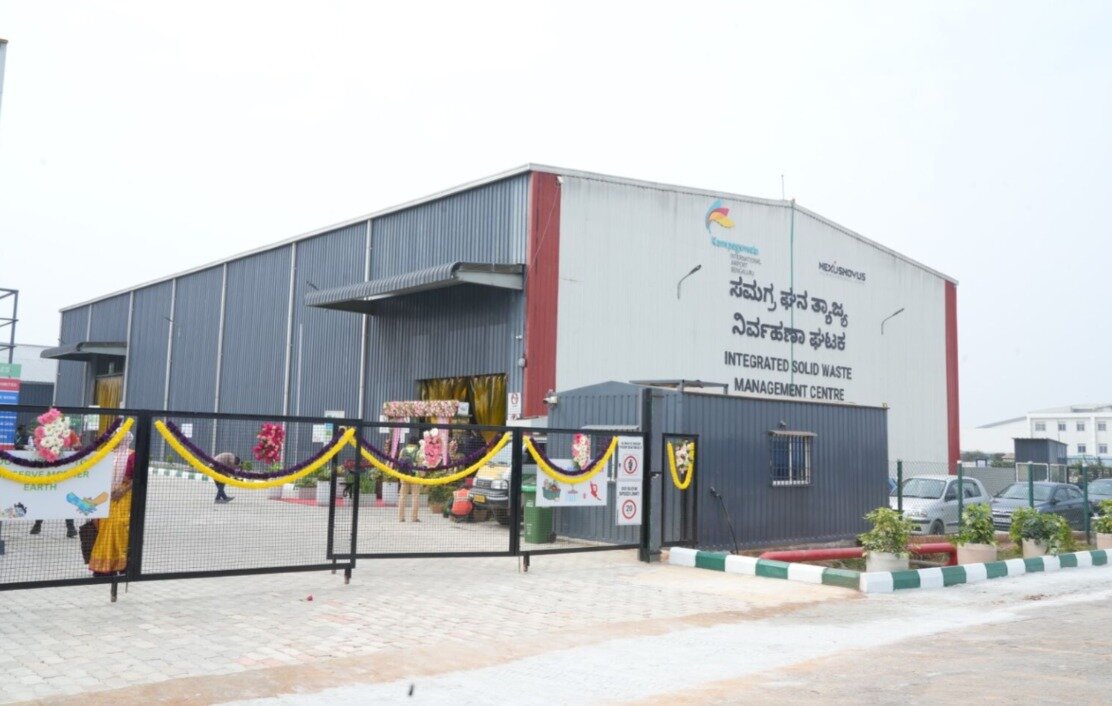
Designed with a total processing capacity of 77 tonnes per day (TPD), the ISWMC is designed to manage both organic and inorganic waste streams. Organic waste, up to 50 TPD, is treated through bio-methanation technology, converting biodegradable waste into compressed biogas (CBG) for use in airport kitchens, along with liquid organic manure and compost to support landscaping requirements. The remaining 27 TPD of inorganic waste is processed through advanced segregation systems, with recyclables directed to authorised recycling partners and recoverable material utilised for co-processing in the cement industry.
Speaking on the inauguration, Hari Marar, MD & CEO, Bangalore International Airport Limited (BIAL), added, “As a rapidly growing airport, we are conscious of the responsibility that comes with managing our environmental footprint. At BLR Airport, sustainability is about creating long-term value for people, the community, and the environment. The Integrated Solid Waste Management Centre strengthens our ability to manage waste at source, transform it into a resource, and embed circular economy principles into everyday operations. This initiative reinforces our commitment to resilient infrastructure and responsible growth as we scale for the future.”
This milestone reinforces BLR Airport’s sustainability leadership as the first airport in Asia to achieve Level 5 Accreditation under ACI’s Airport Carbon Accreditation programme, reflecting a 95.6% reduction in Scope 1 and Scope 2 emissions and the achievement of net-zero status well ahead of its 2030 target. BLR Airport has also received multiple ACI Green Airports Recognition awards for its work in renewable energy, plastics circularity, and climate-resilient infrastructure.
BLR Airport has embedded sustainability as a shared, foundational responsibility through its Behavioural Change – Sustainable Transformation Programme, aimed at empowering all stakeholders to become ambassadors and role models of sustainability excellence. As part of this programme, the airport recently launched its anti-litter campaign, “Namma Airport, Namma Responsibility,” with the objective of raising awareness and educating passengers, partners, and employees on the importance of cleanliness through responsible waste disposal and effective segregation practices. By fostering ownership and everyday sustainable behaviour across the airport ecosystem, the initiative plays a critical role in improving segregation at source and maximising the long-term effectiveness of the Integrated Solid Waste Management Centre.
Aligned with BIAL’s sustainability vision of “touching lives by nurturing a sustainable future through initiatives that drive economic, social, and environmental transformation,” the ISWMC demonstrates how large-scale infrastructure can seamlessly integrate sustainability, innovation, and operational excellence while delivering measurable environmental impact.
RELATED NEWS
- 2026-09-16
- Press Release
ACI Asia-Pacific & Middle East calls for smarter capacity, modernised slot policy and stronger climate action at 61st ICAO DGCA Conference