
From Wooden Classroom to Regional Powerhouse: The Story of Fiji Airports Aviation Academy
- 2026-01-16
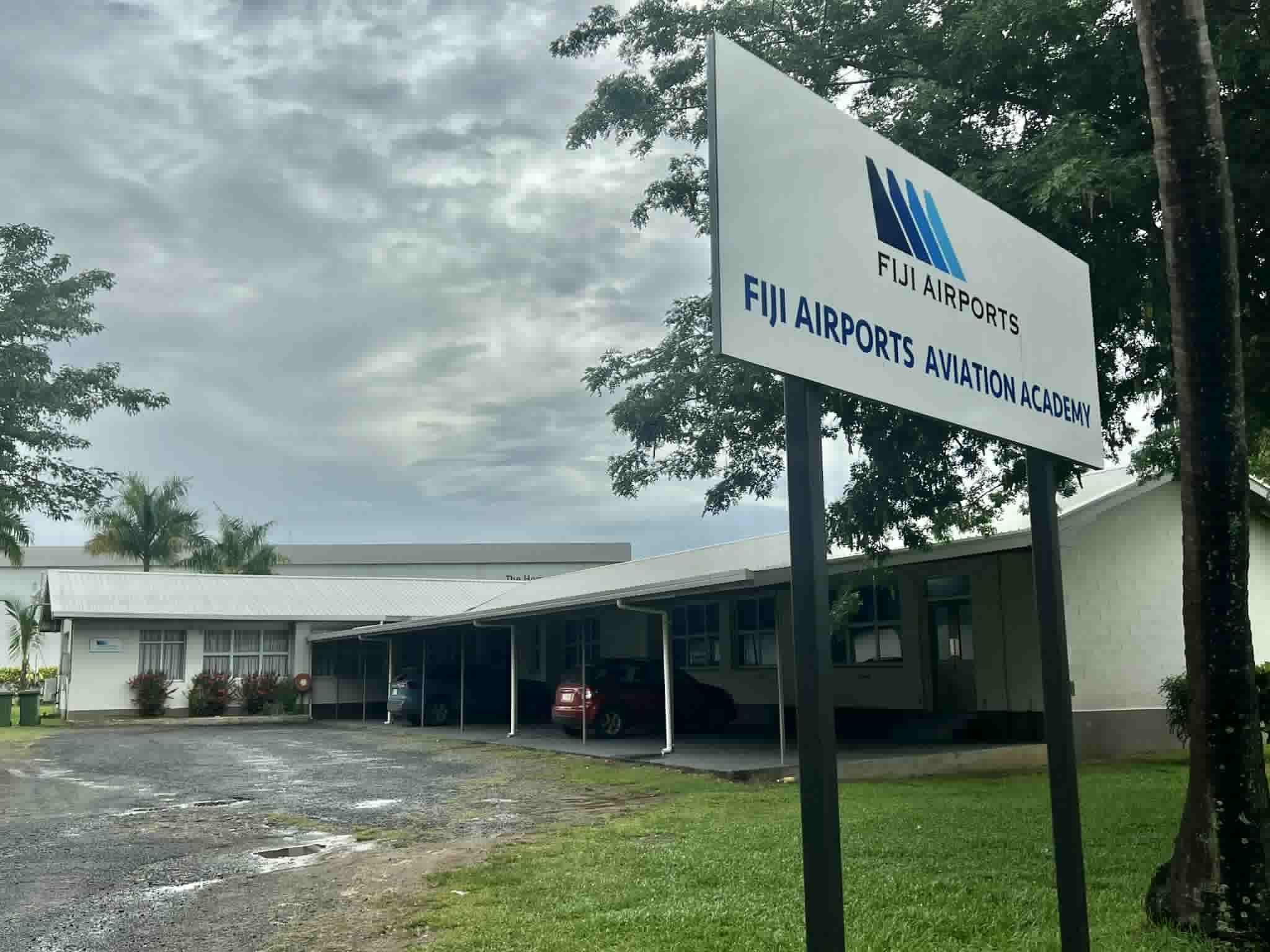
From a small wooden classroom near the arrival concourse at Nadi International Airport to an established regional aviation training institution, the Fiji Airports Aviation Academy (FAAA) is one of Fiji’s quiet yet critical success stories — a story of commitment, resilience, and belief in building local and regional capability, often with limited resources but always with high standards.
Few understand this journey better than Isei Tudreu, Chairman of the Board of Fiji Airports and a former Air Traffic Controller who dedicated more than 40 years to the organisation.
His career began in 1980, as a cadet, one of the first five locals to pioneer Air Traffic Control training in Fiji.
When Mr Tudreu joined the then Civil Aviation Authority of Fiji as an Air Traffic Control cadet, aviation training for locals was still largely catered for overseas.
Out of all the applicants, only five were selected to pioneer what was then known as the school of Air Traffic Services, today’s Fiji Airports Aviation Academy.

The five included Mr Tudreu, Shailendra Pandaram, Toga Tiko, Satish Narayan and Vijay Narayan.
“Before our intake, ATC trainees were sent to New Zealand or Singapore,” he recalled.
“We were among the first locals to be trained here in Fiji.”
Their training took place in a modest wooden building opposite the terminal, and they were the first cohort to undertake the basic Air Traffic Control course (ICAO 051), under the tutorship of Mr Praveen Singh, followed by advanced aerodrome and approach training at the ICAO Regional Training Centre in Bangkok, Thailand.
This training laid the foundation for the academy's growth and success to what it is today.
Over time, the academy expanded its scope and credibility, and what began as basic training evolved into the delivery of aerodrome, approach, area control, and surveillance training, all conducted locally.
The academy building was relocated from the terminal precinct to the Fiji Airports headquarters, adjacent to the control tower, and later to its current location on Delana Road within the Fiji Airports compound.
Yet even as facilities changed, investment remained gradual.
“Growth has been steady rather than fast,” Mr Tudreu explains.
“But despite that, we have become very good at what we do.”
Under the leadership of figures such as Mr Watisoni Nata, the academy embraced a regional mandate and welcomed trainees from across the Pacific, a relationship that endured to this day.
One of the academy’s strongest differentiators is its ability to train and license regional aviation personnel in Fiji, a capability rare among small island states.
Trainees from Vanuatu, Samoa, Kiribati, and Tuvalu have completed programmes in Flight Information Service, Aerodrome Control, and Approach Control, many of whom have become licensed officers before returning home to lead operations.
When regulators questioned whether locally trained officers could safely assume operational roles, the academy’s response was process-driven and evidence-based.
“Our training was robust. We could show exactly where each scenario was taught—in theory, in examinations, and in live operational environments.”
The academy operates under rigorous oversight from the local regulator, the Civil Aviation Authority of Fiji, and, more recently, the Higher Education Commission of Fiji, with its programmes subject to frequent audits, including international assessments.
Mr Tudreu said the International Civil Aviation Organisation’s continuous monitoring approach also requires training institutions to consistently meet global standards.
He shared how audits have played a big part in the academy’s journey and something they embraced as a tool for improvement.
“Early external audits by Australian aviation assessors helped strengthen systems, documentation and instructional quality.
“We were not only audited; we were challenged and improved through the process.”
Despite its achievements, Mr Tudreu said the academy’s future depends on sustained and targeted investment which forms part of Fiji Airports strategic plan.
“Our success so far has been achieved through gradual investment,” he says. “But to meet future demand, both locally and regionally, we need to continue on the path of investing.”
As air traffic volumes grow, technology evolves, and regional states seek reliable training partners, the academy must continue upgrading infrastructure, simulators, learning technologies, and specialist training programmes.
The return on that investment, Mr Tudreu argues, is already proven. The academy has produced leaders across Fiji and the region, directors of civil aviation, chief executives, regulators, and senior professionals in air navigation services.
“This academy has trained people who now lead aviation organisations, not just in Fiji, but across the Pacific.”
At its core, the academy operates on a simple philosophy: train for success.
Candidates undergo rigorous entry standards, followed by structured development that moves from classroom instruction to simulation and live operational environments.
“We tell them, we show them, and then we let them do it,” Mr Tudreu says.
“That progression builds confidence and competence.”
Among those trained at the academy were senior leaders such as Pacific Aviation Safety office General Manager Ueta Solomona, Kevin Dick Abel, Airports Vanuatu Limited Head of Air Navigation Services, Civil Aviation Authority of Fiji CEO Theresa Levestam, CAAF Executive Manager Ground Safety Alisi Namoro, Fiji Airports General Manager Air Traffic Management and Operations Amit Singh, Air Traffic Management Head of Operations Ivan Wong, highlighting the institution’s long-standing impact.
From its humble beginnings in a wooden classroom to its role as a trusted regional aviation training provider, the Fiji Airports Aviation Academy has come a long way.
“With the continued investment,” Mr Tudreu says, “this academy shall continue to serve Fiji, strengthen regional aviation safety, and develop the next generation of aviation professionals.”
For a small island nation with significant aviation responsibilities, the message is clear: investing in the academy is investing in the safety, connectivity, and future of the Blue Pacific skies.
RELATED NEWS

- 2026-02-21
- Members’ News
Gulf Air and Bahrain Airport Company Announce Landmark Investment in Human Capital through New Compensation & Benefits Framework and Medical Insurance Programme

- 2025-12-23
- Members’ News
Fiji Airports Aviation Academy: Shaping the Skies of the Blue Pacific