


Study on Climate Adaptation Approach for APAC & MID Airports
.png)
Airports across the Asia-Pacific and Middle East are increasingly exposed to climate-related disruptions. ACI APAC & MID introduce a brand new Study: Climate Adaptation Study in 2025, to provide the methodology, findings, and tools airports need to build robust adaptive capacity.
About the Study
Upon request of ACI APAC & MID Regional Environment Committee, ACI APAC & MID in collaboration with AECOM embarked on a study to establish consistent and stepwise methodologies to assess climate risks and strengthen resilience across diverse geographies.
_1780042593.png)
_1780042659.png)
Study Approach
The study was developed through an extensive regional engagement process, drawing on the real-world experiences of airport operators from across Asia, the Pacific, and the Middle East. The comprehensive pilot phases generated critical data regarding the state of climate resilience across APAC & MID airports.
_1780043373.png)
A dedicated Task Force of airport Subject Matter Experts guided the creation of the step-wise guidance and core tools.
.png)
47 airport operators participated in testing the Climate Risk Maturity Check Tool, revealing regional readiness levels.*
.png)
16 airports engaged in deep-dive risk Assessments across near, mid and long-term time horizons, supported by 24 engagement sessions.
A group of Pacific airports cluster at the top of the distribution with the highest total maturity scores, indicating more established and consistently embedded risk and adaptation practices. Airports across the Asia region dominate the mid-range and display the widest spread, likely due to the geographical size of the region and number of countries represented. Middle East airports are concentrated toward the lower end, reflecting earlier‑stage development of climate maturity. Interpretation of results should remain cognizant that this is a sample of all airports across the APAC & MID, with outputs skewed to the Asia region given the higher number of participants from this region.
The gap between the top and bottom of the distribution is substantial, highlighting significant disparities in readiness across regions. At the same time, a long tail of lower‑scoring airports across regions points to common global challenges in fully operationalising climate resilience.
*Common risks were identified across airports for extreme heat, extreme rainfall, storms/high wind events and rising temperatures.
This signals that climate-related issues can persist even when operational, political and environmental conditions differ across regions.
The Study reflects ACI APAC & MID's unwavering commitment to enhancing climate resilience in the aviation industry. By strengthening collaboration between airports and sustainability stakeholders, ACI APAC & MID is driving practical solutions and establishing industry-leading best practices for mitigating climate risks.
Hear from our Airports Members on how the comprehensive framework provides airport members with a structured, practical methodology to identify and mitigate climate risks.
We thank Airport Authority Hong Kong, Airport Development Group Pty, Ltd, Ras Al Khaimah International Airport, and Port Moresby International Airport for sharing the testimonials.
Read to build resilence?
The tools are ready. Now it's time to integrate them into your airport's strategic planning. We recommend the following immediate actions for ACI APAC & MID airport members.

Share findings from the Maturity Check with senior staff to build awareness, secure internal buy-in, and determine how coordinated actions can be managed across departments.
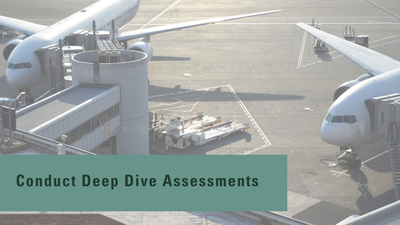
Build on high-level assessments by conducting deep dives into specific asset classes or precincts to identify key vulnerabilities and priority risks using the Assessment Tool.


Add rigour by formalising actions into a plan with nominated owners, funding, and metrics. Crucially, integrate these adaptation actions directly into your airport masterplans.
Effective resilience requires partners. Engage with airlines, government agencies, utilities, and community representatives to align on priority risks and coordinate joint adaptation efforts.
Request Access to the Tools
Get your complimentary access to the Guideline, Maturity Check Tool and Assessment Tool.
Access Climate Adaptation Assessment Guideline (Members Exclusive)
Interested Parties?
