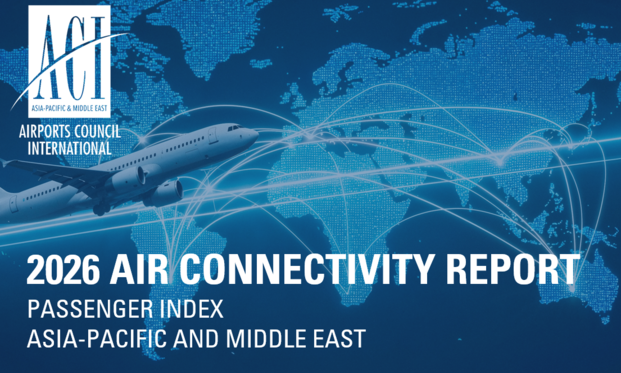
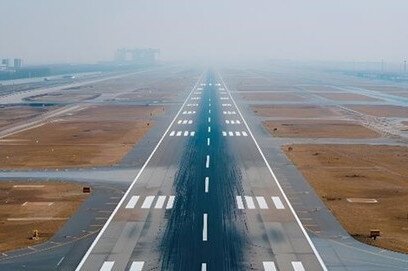
Airports Council International Asia-Pacific & Middle East (ACI APAC & MID), the trade association representing over 600 airports across Asia-Pacific and the Middle East, today released its flagship Air Connectivity Index, recording an average growth of 11% in 2025 across the two regions.
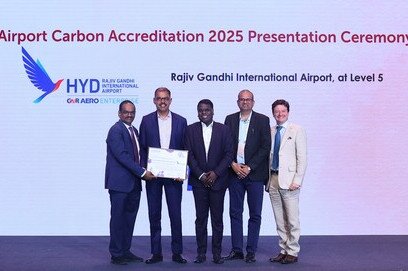
This milestone places RGIA among the top four airports in the ACI Asia-Pacific & Middle East region to achieve Level 5 — the highest level of carbon management certification under the ACA framework. The accreditation reflects RGIA’s commitment to aligning with global climate goals, maintaining net zero CO₂e emissions for Scope 1 and 2, and striving towards net zero Scope 3 emissions by 2050 or earlier.
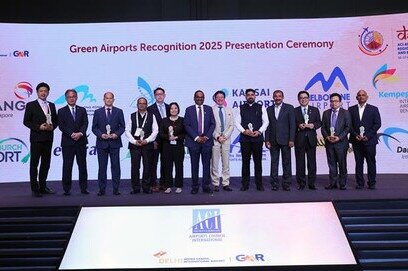
A record number of participants led to 12 airports receiving Platinum, Gold, and Silver awards in New Delhi for outstanding Sustainable Energy Initiatives.
This capital expenditure, revealed today by Airports Council International Asia-Pacific & Middle East (ACI APAC & MID), the trade association representing over 600 airports from 46 countries/ territories, highlights the regions' commitment to meeting the increasing demand for air travel and cargo.
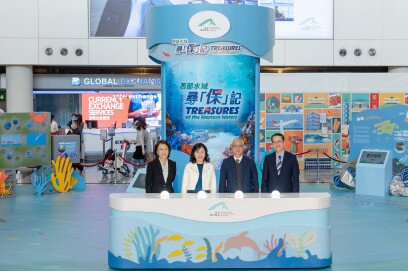
To raise public awareness of marine conservation, the “Treasures of Western Waters” exhibition was unveiled today in the public area at the Arrivals Hall of Hong Kong International Airport (HKIA).
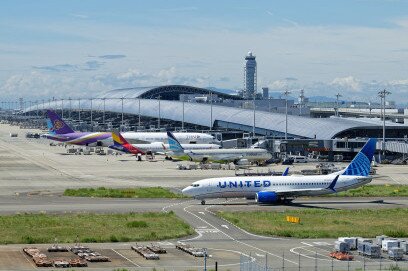
Kansai Airports will implement new measures for delayed flights exceeding Osaka Itami Airport’s operating hours (9:00 p.m.) starting from April 1, 2025.
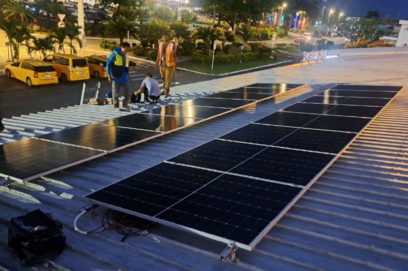
Fiji Airports is delighted to announce a series of its sustainability initiatives aimed at reducing carbon footprint at its airport facilities.
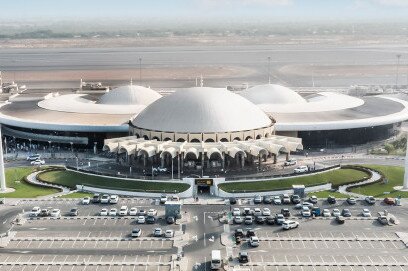
Sharjah Airport has reaffirmed its leading position in the Airport Carbon Accreditation (ACA) program, administered by Airports Council International (ACI), by successfully renewing its Level 3+ (Neutrality) accreditation.
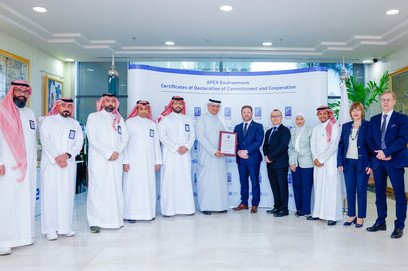
The Airports Council International's Airport Excellence Programme (APEX) environmental review was successfully carried out at King Abdulaziz International Airport, from 16-20 February 2025, hosted by Jeddah Airports Company.
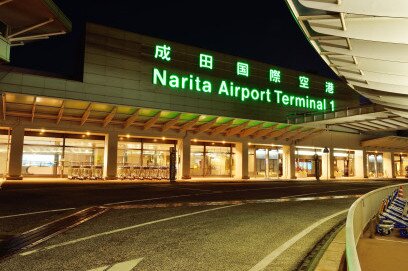
Narita International Airport has received global recognition for its decarbonization efforts, achieving Level 4 accreditation under the Airport Carbon Accreditation (ACA) program*1.
Notice
We use cookies to ensure that we give you the best experience on our website. If you continue to use this site we will assume that you agree with it. Learn more